Circle CP+ on your calendar. Canon could roll out new APS-C bodies in the first half of 2026, and the star of the show is very likely the EOS R7 Mark II. Timing lines up neatly with the end of February CP+ show in Yokohama.
Headline rumor: Canon is testing an APS-C sensor around 40MP that can feed up to 8K/60p video. If true, that would give Canon the highest-spec APS-C video pipeline on the market and match (or surpass) Fujifilm’s current 40MP BSI lead on the stills side.
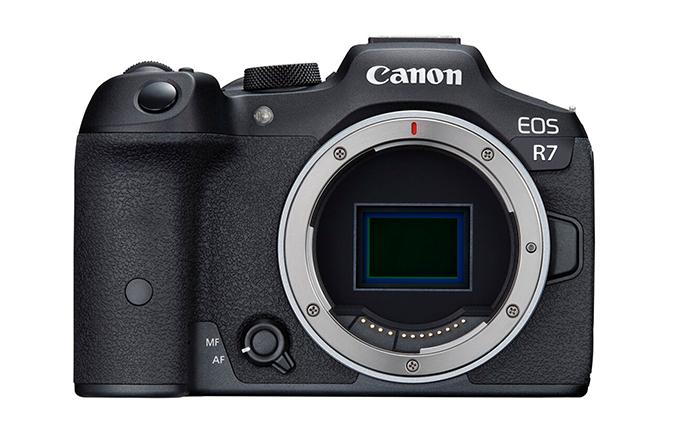
Does 40MP for an R7 II make sense? Absolutely. The original R7 sits at 32.5MP—jumping to ~40MP is only about a 15% bump in linear resolution, but the “40” badge plays great on a box and unlocks meaningful benefits for both detail and video oversampling. Most importantly, it finally gives Canon a chance to debut a BSI and/or stacked APS-C sensor. If this is the flagship crop sensor that has to carry Canon’s APS-C line for the next 4–5 years, it needs modern silicon. Full stop.
Why this sensor matters: BSI and stacked aren’t “nice-to-haves” anymore
On full frame, Canon users can climb the stacked ladder with the R5 II, R3 and R1. On APS-C, the R7 II will be the top rung—there’s nothing above it. That’s exactly why this sensor has to be the one that resets the bar.
- BSI benefits: Better light gathering per pixel, cleaner high ISO, and improved dynamic range—especially important as pixel pitch shrinks moving to ~40MP on APS-C.
- Stacked benefits: Much faster readout to tame rolling shutter, higher burst rates with blackout-free EVF, snappier AF calculations, and the data throughput you need for serious video modes.
Quick math check: a ~40MP Canon APS-C would be roughly 7728 pixels across. That’s just enough horizontal resolution to deliver true 8K UHD (7680 wide) without cropping. Translation: if the processor and heat management are up to it, full-width 8K becomes real.
8K/60p on APS-C: what it would take (and what it would unlock)
- Processor and codecs: Expect a next-gen DIGIC with beefy HEVC/All-I options and 10-bit 4:2:2 across the board. 8K/60 is a bandwidth monster.
- Media: CFexpress Type B is essentially mandatory for high-bit-rate 8K. A companion UHS-II slot keeps things flexible.
- Thermals: Bigger heatpipe, smarter firmware limits, and perhaps a more breathable chassis. Nobody wants an 8K camera that’s actually a 5-minute camera.
- Oversampling goodness: 8K source resolution means pristine 4K oversampled video, potentially at 4K/120 without a heavy crop if readout speed cooperates.
- Rolling shutter: A stacked design could get us into the ~10–12 ms territory (or better) for stills and video. Wildlife panning and fast action thank you in advance.
How this stacks up against rivals
Fujifilm currently owns the APS-C resolution crown with its 40MP BSI sensor and 8K/30p capability. Sony’s latest a6xxx bodies favor speed and AF sophistication over headline resolution. If Canon truly ships 40MP with 8K/60p, it leapfrogs everyone on the spec sheet and puts pressure on both Fuji and Sony to answer with faster readouts or higher frame-rate 8K.
What I’m watching for on the spec sheet
- Sensor tech: “BSI” is the floor. If we see “stacked,” that’s the headline.
- Video modes: 8K/60p, robust 4K/120p, internal 10-bit 4:2:2, and reasonable crops. Add reliable heat performance.
- Media and I/O: CFexpress Type B + UHS-II, full-size HDMI, USB-C with fast PD and data.
- Autofocus: Next-gen subject detection (birds, vehicles, people), smarter tracking through clutter, pre-burst capture.
- Stabilization: Better coordinated IBIS+IS behavior for long telephoto work; tighter micro-jitter control for video.
- Burst and buffer: If stacked, think 30–40 fps e-shutter with deep raw buffers and minimal viewfinder blackout.
- Viewfinder and LCD: Higher-res EVF, faster refresh, and a brighter rear screen you can actually see in midday sun.
- Connectivity: Wi‑Fi 6/6E would be a welcome surprise for faster file pushes and more reliable remote work.
RF-S lens reality check (and a wish list)
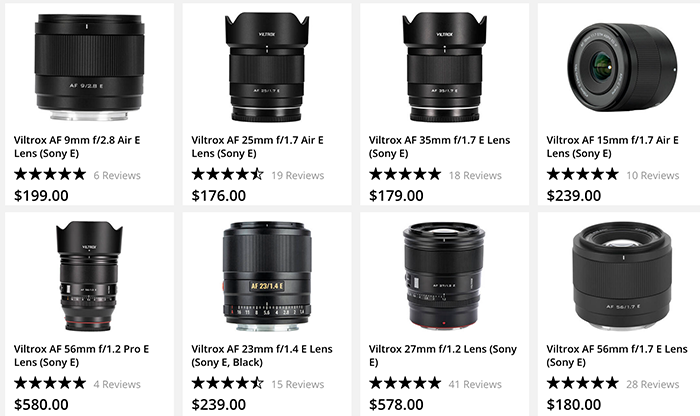
All this resolution needs glass to match. The RF-S lineup has good mainstream zooms, but a flagship APS-C body begs for faster, sharper options. Canon has loosened the door a bit for third parties on APS-C, which helps, but a native Canon trio would make this body sing:
The good news: high-res crops pair beautifully with existing full-frame RF telephotos. The RF 100–500mm becomes a wildlife scalpel on APS-C.
Price, timing, and where it lands in the lineup
Launch window: before the end of February 2026 feels likely given CP+. The original R7 debuted at a very friendly price; adding BSI/stacked silicon and 8K ambitions could nudge the R7 II higher. If Canon goes stacked, think premium. If it’s BSI-only with smart readout tricks, it could stay closer to current R7 territory. Either way, expect the original R7 to hang around as the value option—or see a price drop if Canon wants to push volume.
Who this camera is for
- Wildlife and sports shooters who crave “free reach” with pro-grade AF and faster readout.
- Hybrid creators who want sharp oversampled 4K and credible 8K without carrying full-frame bulk.
- Travel shooters who prize detail and portability but still want pro handling and IO.
My read on the likely scenarios
- Conservative: 40MP BSI, much faster readout than R7, full-width 8K/30p, excellent 4K/120p, and big AF/IBIS upgrades.
- Spicy: 40MP stacked, 8K/60p internal, 30–40 fps e-shutter with deep buffers, blackout-free EVF, and rolling shutter tamed to near non-issue.
Which one would I bet on? The safe money is a very good BSI sensor that still hits the 8K marks (maybe with limits) and delivers a big generational jump in responsiveness. If Canon actually pulls off stacked, we’re talking about the most ambitious APS-C camera they’ve ever shipped—period.
CP+ is coming fast. If Canon wants to make a statement in APS-C, the R7 Mark II is the moment to do it. I’m ready for a bigger splash this time.
–
Via CR




 Trademark Application News: Chinese sources report that Canon has applied for a proprietary 16K trademark (with designs encircled in gold lettering of 4K, 6K, and 8K), awaiting approval. This may be a preparation for the future high-resolution VR photography market, reflecting their ambition to expand beyond the pure photography market. It is certain that Canon, capable of manufacturing 24K sensors, would find it no challenge to produce 16K specialized equipment. –