
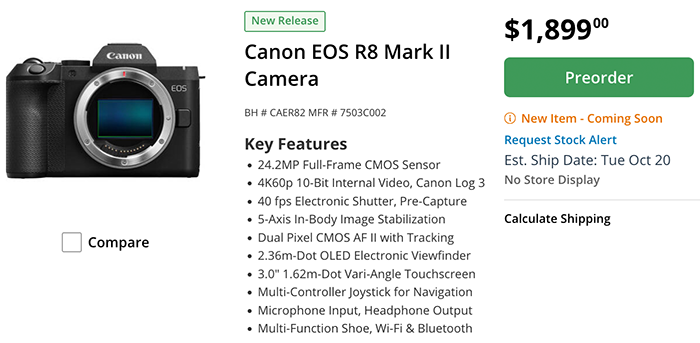

Leaked images of the new Canon R8II
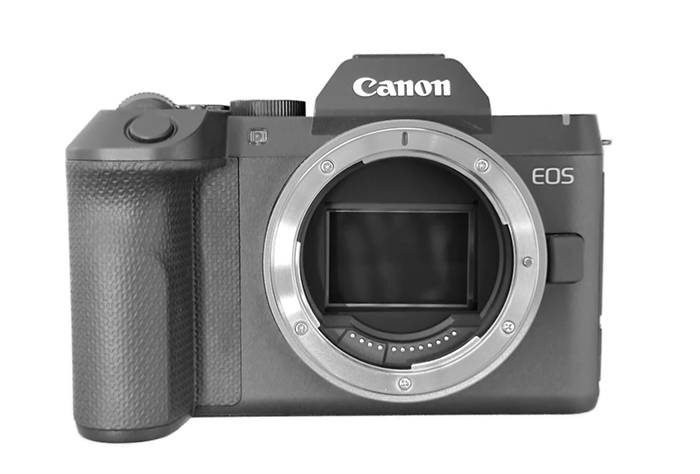
Ordinary Filmmaker shared the first leaked images of the new Canon R8II:
- 24MP full-frame sensor — from the EOS R6 Mark II
- Sensor protective curtain
- Native ISO: 100–102,400
- Dual Pixel AF II
- Deep Learning AI
- New animal AF tracking
- Rear joystick
- Downloadable color filters
- New LUTs
- Create 3D video from 2D images
- 40fps electronic shutter
- Maximum shutter speed: 1/16,000 sec.
- No mechanical shutter
- Pre-shooting at 20fps
- 7.5 stops of IBIS
- Full HD 1080 at 180p
- 4K at 60p
- 6K-oversampled 4K
- Canon Log 3
- Warm-up during video recording
- Side-access SD card slot
- LP-E17 battery
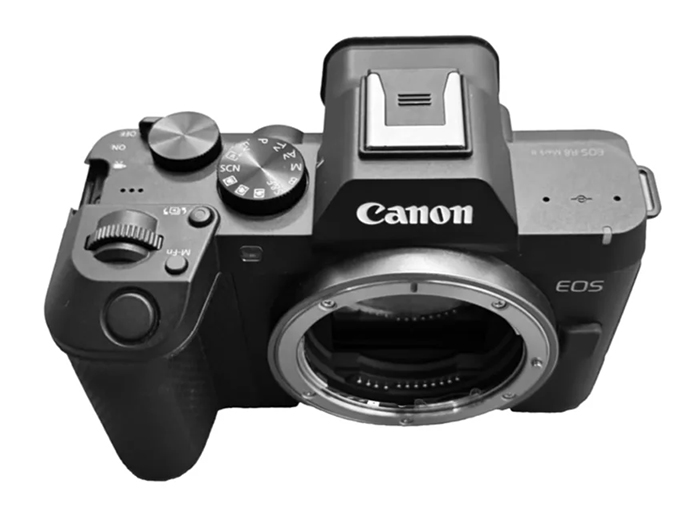
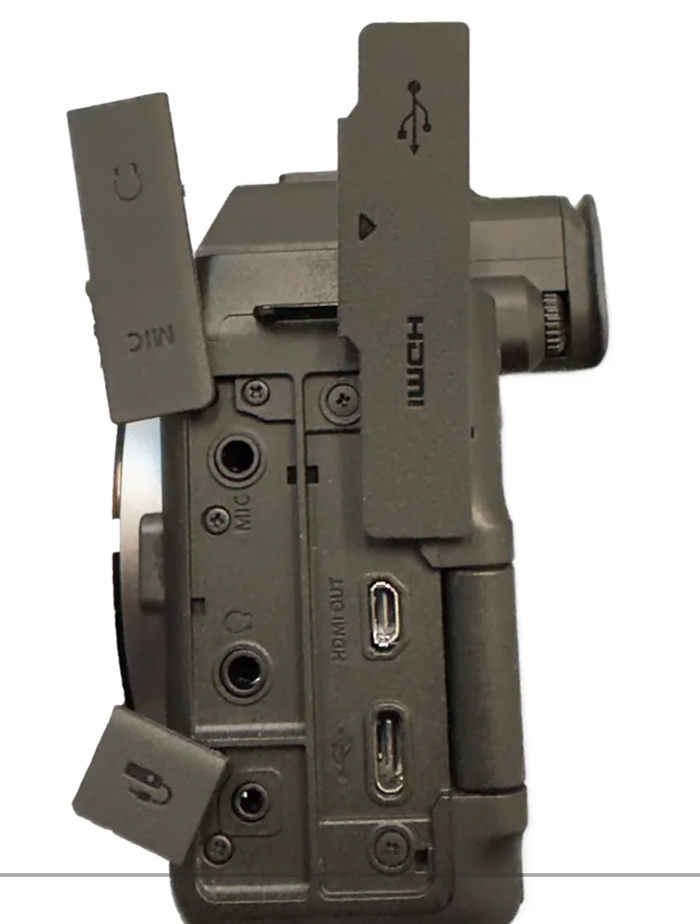
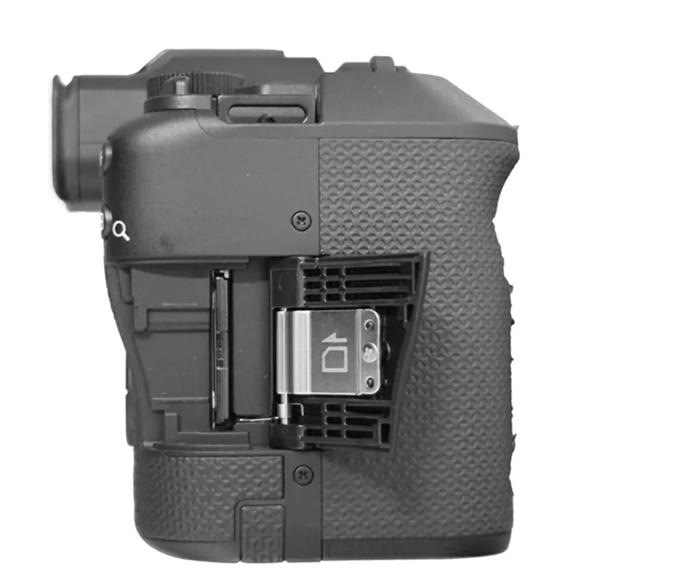
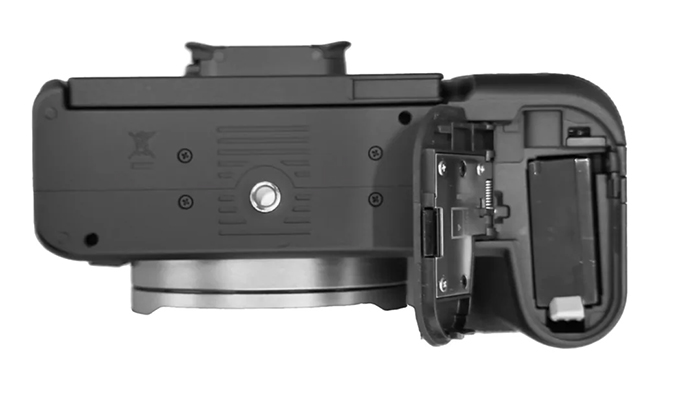
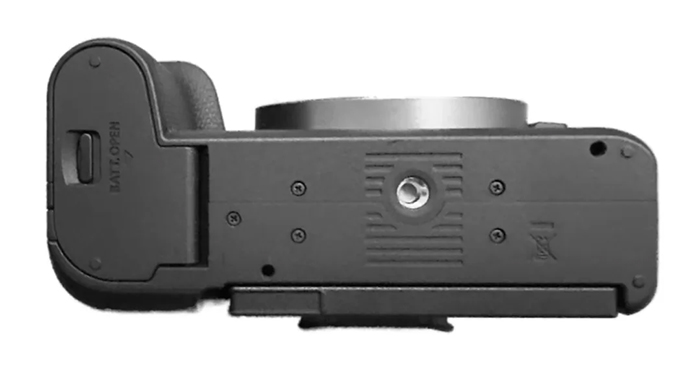
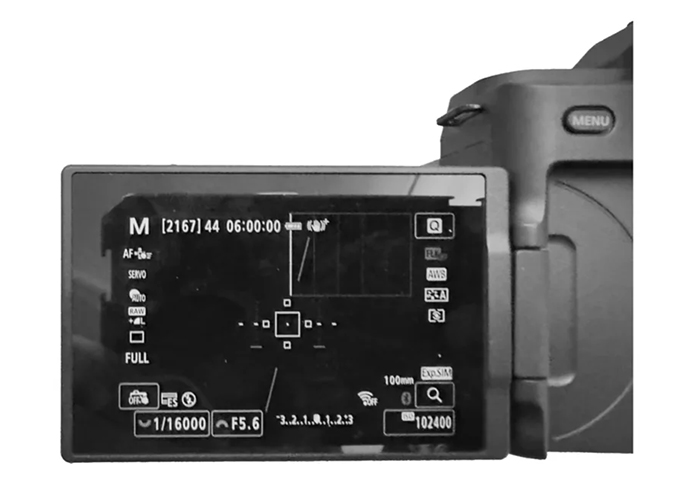
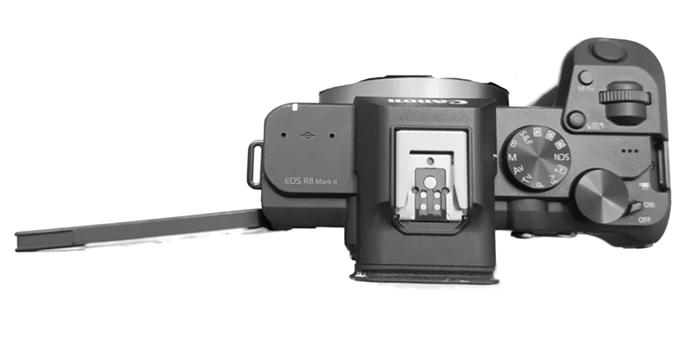
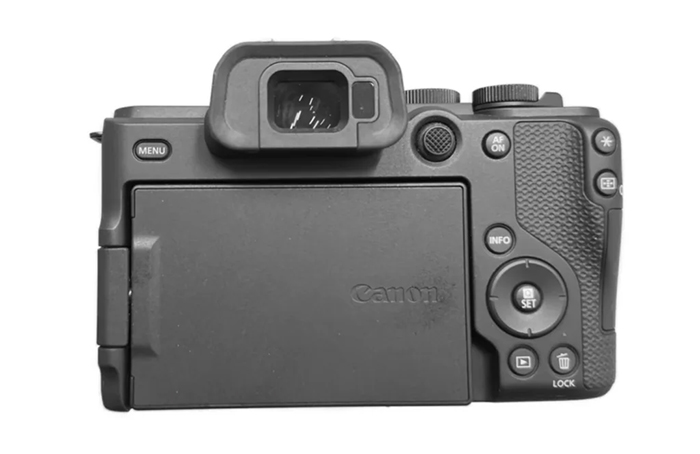
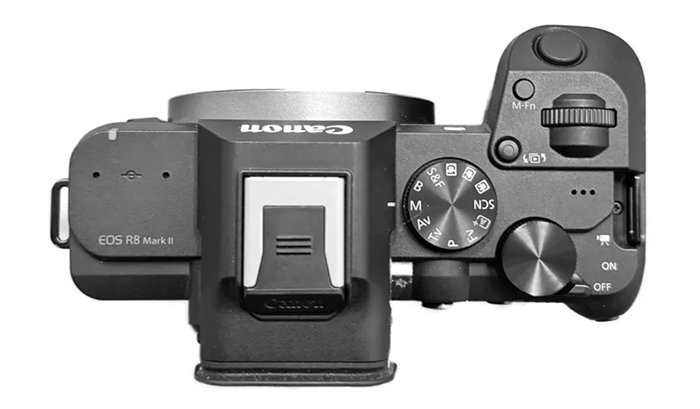
Canon R8II specs leaked…coming on September 15
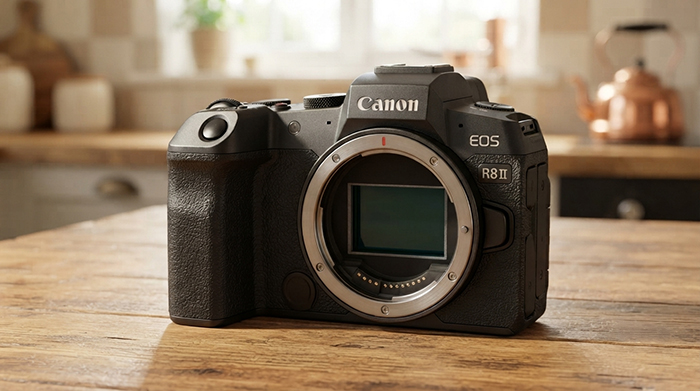
AI generated image of the rumored more “angular” looking R9II
Ordinay Filmmakers reports that Canon will announce the new R8II on September 15. Here are the rumored specs:
- 24MP full-frame sensor — from the EOS R6 Mark II
- Sensor protective curtain
- Native ISO: 100–102,400
- Dual Pixel AF II
- Deep Learning AI
- New animal AF tracking
- Rear joystick
- Downloadable color filters
- New LUTs
- Create 3D video from 2D images
- 40fps electronic shutter
- Maximum shutter speed: 1/16,000 sec.
- No mechanical shutter
- Pre-shooting at 20fps
- 7.5 stops of IBIS
- Full HD 1080 at 180p
- 4K at 60p
- 6K-oversampled 4K
- Canon Log 3
- Warm-up during video recording
- Side-access SD card slot
- LP-E17 battery
First images of the new SIRUI Saturn V2 Full-Frame Anamorphic Lens Series

Sirui has shared some info about their upcoming new Saturn V2 Full-Frame Anamorphic Lens Series:
We are preparing to launch the new SIRUI Saturn V2 Full-Frame Anamorphic Lens Series, the next generation of our Saturn anamorphic lineup.
Saturn V2 builds upon the original Saturn series with new design and usability improvements for modern filmmakers and hybrid creators. One of the key upgrades is the newly developed rotating optical structure, which allows users to switch between horizontal and vertical anamorphic shooting orientations, providing more flexibility for both cinematic production and vertical content creation.
The Saturn V2 series will include 35mm, 50mm, and 75mm focal lengths, with support for Sony E, Canon RF, and L mounts.


Possible bad news for Canon: Sony plans to acquire Tamron?

Japanese business magazine Diamond reports that Sony Group has proposed acquiring lens manufacturer Tamron. The potential deal is said to be worth approximately 200 billion yen.
I cannot access the complete Diamond article, so some details and context may be missing. However, if the report is accurate, the timing could be particularly significant for Canon users. Tamron has only recently begun producing autofocus lenses for Canon’s RF mount, starting with APS-C models for EOS R cameras.
Why would Sony want to acquire Tamron?
Sony has maintained a stake of roughly 15% in Tamron for many years. At the same time, activist investment firms—including Effissimo Capital Management—have built substantial positions in the lens manufacturer.
Buying Tamron outright could help Sony limit external influence over an important business partner. It would also give the company greater control over Tamron’s optical expertise, manufacturing resources, and future product strategy.
Tamron is already one of the most important third-party lens manufacturers for Sony E-mount, so the two companies have a well-established relationship.
What could the acquisition mean for Canon RF users?
Until recently, photographers using Canon mirrorless cameras had very limited access to third-party autofocus lenses. The arrival of Tamron’s first APS-C RF-mount lenses therefore represented an important step toward a broader and more competitive lens ecosystem.
For EOS R7, R10, R50, and R100 owners, third-party APS-C lenses can fill obvious gaps in Canon’s RF-S lineup. Tamron is especially well positioned to provide compact zooms with useful focal ranges and competitive prices.
A Sony takeover could now raise questions about how far Tamron’s support for Canon RF will expand.
Possible consequences for the Canon RF system
- RF development could continue normally: Tamron may be allowed to remain operationally independent. If its Canon lenses are commercially successful, there would be a clear financial reason to continue producing them.
- New RF lenses could receive a lower priority: Under Sony ownership, Tamron might devote more development and manufacturing resources to E-mount products.
- Full-frame RF lenses could be delayed: Canon users are still waiting to see whether Tamron’s APS-C support will eventually lead to full-frame RF products. A change in ownership could influence that decision.
- Canon’s licensing strategy could become more complicated: Tamron’s RF products presumably depend on an agreement with Canon. Canon may be less enthusiastic about sharing technical access with a lens company controlled by one of its main camera competitors.
- The RF-S lineup could lose momentum: Tamron had only just begun contributing to Canon’s APS-C mirrorless system. Any slowdown would be disappointing for users hoping to see more affordable alternatives to Canon lenses.
Canon may have more to lose than Sony
Sony already benefits from one of the largest collections of native mirrorless lenses on the market. Canon, by comparison, has only recently started opening the RF mount to selected third-party autofocus products.
That makes Tamron’s entry especially important. The company could help strengthen the RF-S system with lenses that Canon may not prioritize itself. If Sony ownership limits Tamron’s RF ambitions, Canon users could lose a promising source of new lenses just as the lineup was beginning to expand.
There is no reason to assume that Tamron would immediately stop making Canon lenses. Existing agreements could remain in place, and continuing to serve RF users might be commercially attractive. Nevertheless, Sony ownership would introduce a new strategic complication that did not previously exist.
Diamond is considered a credible source of Japanese financial reporting, but it remains unclear whether the proposed acquisition will lead to a completed transaction. From Canon’s perspective, the most important question is whether Tamron’s recent move into APS-C RF lenses will continue—or whether the expansion will end before it really gets started.
Would a Sony-owned Tamron continue developing RF and RF-S lenses, or would Canon users once again be left with fewer third-party choices? What do you think?
PetaPixel: Which High-Resolution Full-Frame Camera Has the Best Sensor?
Chris tested the four High Res cameras from each company. That’s what he thinks about them:
- At base ISO, this model resolved slightly less detail than the other cameras, though the difference is very minor.
- At higher ISOs (above 5000), it applies aggressive baked-in noise reduction to the RAW files, resulting in cleaner images but a noticeable loss of fine detail.
- It has the slowest readout speed of the group at around 37ms, which can result in more rolling shutter distortion when using the electronic shutter.
- However, its in-camera high-resolution multi-shot mode is a notable feature that works effectively when shooting on a tripod.
- Thanks to its higher resolution, it offers a noticeable improvement in overall detail, making it highly effective for heavy cropping or large-scale printing.
- It showed strong dynamic range and high-ISO performance, which is attributed to image-stacking technology and the noise advantages of having more pixels at equivalent viewing distances.
- Its readout speed has improved significantly over previous generations to around 19–20ms, though some rolling shutter can still be observed in fast-action scenarios.
- Its overall sharpness and detail are comparable with the Nikon Z8.
- While it uses baked-in noise reduction in its RAW files, this sensor handles it well, preserving detail while keeping images clean at higher ISOs.
- Equipped with a stacked sensor, it boasts a very fast readout speed of around 6 to 6.5ms, making rolling shutter virtually non-existent and making the electronic shutter highly practical for high-speed action.
- Like the Canon, it delivers strong sharpness and detail, but produces slightly cleaner shadow details and smoother blacks when shooting at high ISOs.
- Featuring a fast readout speed of under 4ms, it allows users to shoot fast action and sports using the electronic-only shutter without worrying about rolling shutter distortion.
- The sensor’s balance of speed, dynamic range, and clean image quality remains a solid asset for shooters.
So who wins?
- For Raw Sensor Performance (Detail, Dynamic Range, and ISO): The Sony a7R VI is the clear top performer. It is favored for its high 66-megapixel resolution, which provides unmatched cropping flexibility, and its class-leading dynamic range (greatly aided by its dual-exposure image stacking).
- For Speed, Wildlife, and Action: The Nikon Z8 takes the crown. Its sensor scanning speed of under 4ms is so fast that it completely eliminates the need for a mechanical shutter, allowing you to capture high-speed action with zero rolling shutter issues.
- For the Best All-in-One Hybrid Package: The Canon EOS R5 Mark II is highly praised as the most versatile option. It beautifully splits the difference by combining excellent 45-megapixel detail, strong high-ISO noise control, and a fast 6ms stacked sensor that enables incredibly high burst rates with minimal rolling shutter.
DZOFILM Announces Octopus II Multi-Mount Lens Adapter & Marlin 1.4x Extender

Press text:
DZOFILM has announced the launch of the Octopus II Adapter and Marlin 1.4x Extender, providing with greater flexibility, compatibility, and efficiency across a wide range of filmmaking applications, from short-form bloggers, content creators, livestreamers and YouTubers to independent filmmakers, commercial media and advertising, and professional DOPs.
Octopus II: 2nd Generation Multi-Mount Lens Adapter
The new Octopus II is a highly versatile multi-mount lens adapter that supports E, Z, L, and RF mount lenses, as well as Super35, full-frame, and medium-format sensors. With 7.12% more internal space, it offers improved compatibility with DZOFILM’s Arles, Arcana, Vespid, Catta, Pictor, Gnosis, and other professional cinema lenses.
The second-generation design is up to 49% lighter, weighing as little as 190g (depending on mount). Its strong aluminum body is paired with a stainless-steel mount that is rated for more than 100,000 mounting cycles with 0.01mm precision, ensuring long-term reliability and durability.
The redesigned ergonomic handle features directional guides that make lens changes easier, particularly when working with handheld or fully rigged camera setups. A detachable 1/4″ threaded base allows the center of gravity to be shifted onto the adapter, reducing stress on the camera’s native mount. In addition, the factory pre-set flange focal distance eliminates the need for calibration while ensuring accurate infinity focus.
Marlin 1.4x Extender with Integrated Back-Focus Adjustment
The new Marlin 1.4x Extender increases effective focal length by 1.4x while maintaining light loss below one stop, enabling lenses designed for Super35 to cover full-frame sensors.
The extender incorporates premium high-refractive-index SR optical elements, large-diameter aspherical lenses, and an internally flocked design that effectively minimizes stray light. Chromatic aberration is tightly controlled, helping preserve the original character of the lens. Integrated back-focus adjustment eliminates the need for operators to detach the lens or use shims during setup and fine-tuning.
Manufactured with stainless-steel mounts on both sides, the Marlin 1.4x Extender is engineered for long-term reliability and durability. Precision machining further helps prevent binding during mounting and operation.
New Brightin Star 14mm f/2.8 RF-mount Lens

The new lens is now on preorder at BHphoto, Amazon, BrightinStar.