Skip to content

Canon ranked seventh in U.S. patent ranking, now in the top 10 for 42 years running

In the ever-evolving landscape of technology, securing intellectual property is paramount. Canon has consistently demonstrated its commitment to innovation, and the latest U.S. patent rankings are a testament to this dedication. In 2025, Canon secured the seventh position in the number of patents granted by the United States Patent and Trademark Office (USPTO). This achievement marks an impressive 42 consecutive years within the world’s top 10, a feat unmatched by any other company.

Key Highlights from 2025

  • Ranked 7th Overall: Canon obtained 2,623 patents in 2025, solidifying its place among the top innovators.
  • 42 Consecutive Years in Top 10: This remarkable streak showcases Canon’s sustained focus on research and development.

A Strategic Approach to Patents

Canon emphasizes the importance of obtaining patents not only in Japan but also internationally, adapting its patent filing strategy to align with regional business strategies, technological advancements, and product trends. The United States, with its high concentration of tech companies and substantial market, remains a crucial region for Canon’s business expansion and technology alliances.

Canon’s Consistent Performance

Canon’s continued presence in the top 10 for over four decades underscores its long-term commitment to innovation and intellectual property. While the 2025 results are impressive, it’s worth noting their performance in previous years. For example, in 2024, Canon ranked ninth in the U.S. patent rankings and had been the top Japanese company for 20 years running. In 2023, Canon held the fifth position and was the top Japanese company for the 19th consecutive year.

The Bigger Picture

Canon strategically uses its intellectual property portfolio to boost its corporate value. Besides protecting intellectual property rights related to its core business, Canon dedicates significant resources to obtaining intellectual property rights that anticipate future developments in areas like AI, IoT, international technical standards and environmental concerns, helping to create new technologies.

Canon’s consistent ranking among the top U.S. patent recipients highlights the company’s enduring dedication to innovation and its strategic approach to intellectual property. As technology continues to evolve, Canon’s commitment to research and development positions it as a key player in shaping the future.

Top 15 companies by number of US patents obtained in 2025*

Rank Patent holder Number of patents
1 Samsung Electronics Co Ltd 7,054
2 Taiwan Semiconductor Manufacturing Co TSMC Ltd 4,194
3 Qualcomm Inc 3,749
4 Huawei Technologies Co Ltd 3,052
5 Samsung Display Co Ltd 2,859
6 Apple Inc 2,722
7 Canon Inc 2,623
8 Toyota Motor Corp 2,406
9 Dell Products LP 2,301
10 LG Electronics Inc 2,284
11 International Business Machines Corp 2,193
12 Intel Corp 2,054
13 BOE Technology Group Co Ltd 1,957
14 Google LLC 1,782
15 Microsoft Technology Licensing LLC 1,755

Source: Canon

Top 10 Best-Selling Cameras and Lenses at Yodobashi

The large Japanese store Yodobashi shared the best seller list of the second half of December:

Best selling cameras:

  1. Sony α7 V Body
  2. Fujifilm X-T30 III XC13-33mm Lens Kit
  3. Sony α7C II Zoom Lens Kit
  4. Canon EOS R5 Mark II Body
  5. Sony α7C II Body
  6. Canon EOS R6 Mark III Body
  7. Nikon Z5II Body
  8. Hasselblad X2D II 100C Body
  9. Fujifilm X-M5 XC15-45mm Lens Kit
  10. Canon EOS R50 Double Zoom Kit

Best selling lenses:

  1. Sony FE 24-70mm F2.8 GM II
  2. Canon RF100-500mm F4.5-7.1 L IS USM
  3. Sigma 20-200mm F3.5-6.3 DG | Contemporary (E-mount)
  4. Nikon NIKKOR Z 24-120mm f/4 S
  5. Tamron 25-200mm F/2.8-5.6 Di III VXD G2 (E-mount)
  6. Sony FE 70-200mm F2.8 GM OSS II
  7. Hasselblad XCD 2.8-4/35-100E
  8. Canon RF45mm F1.2 STM
  9. Nikon NIKKOR Z 24-70mm f/2.8 S II
  10. Leica APO-Summicron-M f/2/35mm ASPH.

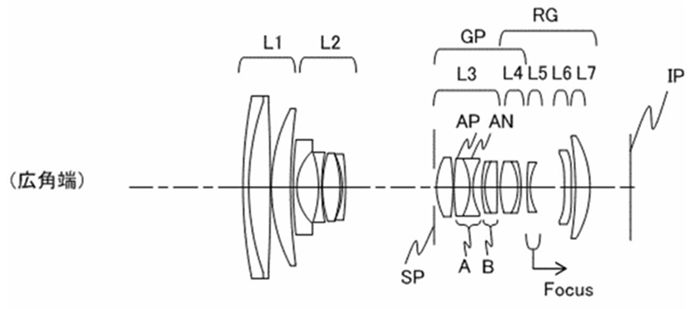
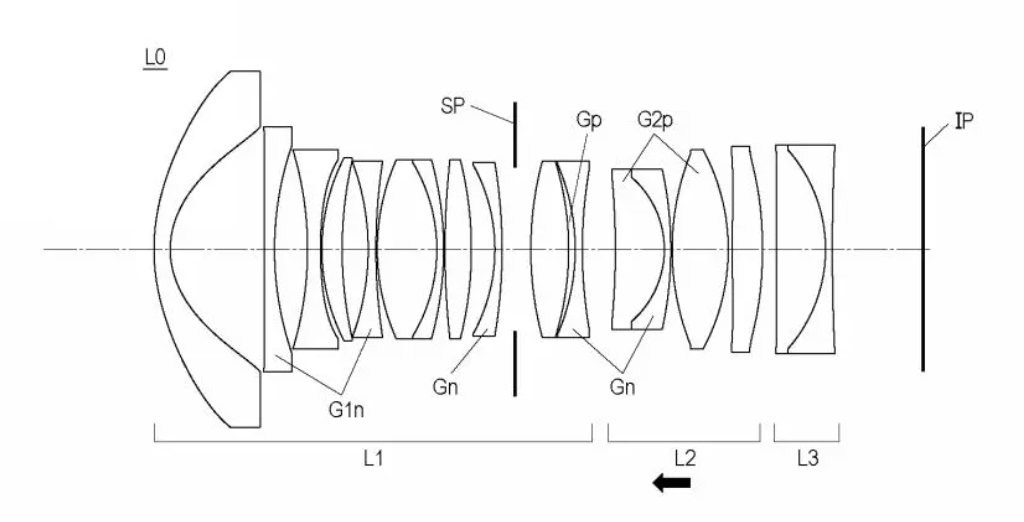
Canon files patent application for the optical systems of “14mm F1.4”, “20mm F1.8 IS”, “20mm F1.4”, and “24mm F1.4”


Canon appears to be exploring several ultra-fast full-frame primes, according to a newly surfaced patent spotted by Asobinet. The filing outlines four distinct optical formulas: –

Example 1

  • Focal length: 14.42
  • F-number: 1.46
  • Half angle of view: 52.34
  • Image height: 18.68
  • Total length: 118.50
  • Back focus: 14.00

Example 2 (this lens has been announced and is available at BHphoto)

  • Focal length: 20.60
  • F-number: 1.46
  • Half angle of view: 42.54
  • Image height: 18.90
  • Total length: 117.50
  • Back focus: 18.44

Example 3

  • Focal length: 20.60
  • F-number: 1.85
  • Half angle of view: 42.64
  • Image height: 18.97
  • Total length: 98.50
  • Back focus: 17.25

Example 4

  • Focal length: 24.00
  • F-number: 1.50
  • Half angle of view: 38.29
  • Image height: 18.95
  • Total length: 113.00
  • Back focus: 12.50

Each scheme focuses by shifting a relatively large optical group, which points to compatibility with VCM-style drive systems. Canon’s current VCM prime lineup doesn’t include anything wider than 20 mm, so a 14 mm f/1.4 based on Design A could be a logical future addition. By contrast, the rumored non-L 20 mm f/1.8 IS likely relies on a different optical approach; given the substantial moving focus group here, lenses derived from this patent would probably land at a higher price tier.

Canon EOS R7 Mark II rumors: specs, release window, and price

The Canon EOS R7 Mark II is shaping up to be Canon’s most anticipated APS-C mirrorless camera for 2026. While other models are expected, this is the one to watch. Current chatter points to a first-half 2026 ship window, with teaser campaigns likely ahead of the announcement. An exact announcement date has not been confirmed.

Rumored specifications

  • 39MP APS-C CMOS sensor
  • Back-side illuminated (BSI) design; conflicting reports about a stacked sensor
  • DIGIC Accelerator mentioned in some reports (unverified)
  • 8.5-stop, 5-axis in-body image stabilization (IBIS)
  • Up to 40 fps electronic shutter
  • “The best autofocus of any APS-C camera” (marketing claim, not verified)
  • RAW video support (resolution and frame rates unknown)
  • Dual card slots: CFexpress + SD
  • Higher-resolution EVF than the EOS R7’s 2.36M-dot panel
  • Larger body, closer in size to the EOS R6
  • LP-E6P battery

Past chatter has also suggested a possible stacked 40MP sensor, but this remains unconfirmed. None of the above is final; details are rumor-stage and subject to change.

Release window and announcement timing

An early 2026 announcement is likely, with shipping targeted for the first half of the year. As launch nears, information quality typically improves, and official teasers are expected to precede the reveal.

Pricing expectations

Pricing remains unknown and may be set close to launch due to ongoing manufacturing and supply dynamics. Canon’s vertical integration in sensors and lithography could help stabilize costs, but final pricing will only be clear at announcement.

What to watch for next

  • Sensor confirmation (BSI vs. stacked)
  • Final autofocus capabilities and subject detection
  • RAW video formats, bit depths, and codecs
  • EVF resolution and refresh rate
  • Body size, ergonomics, and thermal management

Expect the usual cautious responses from sources until closer to launch. We’ll update as higher-confidence details emerge.

via CanonRumors

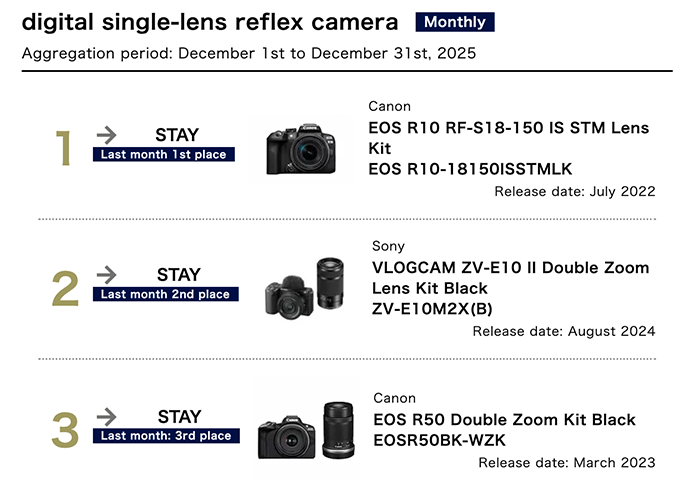
BCN December bestseller list: Canon R10 on top

a

According to the BCN Ranking for December, the Canon R10 lead the pack:

  1. Canon EOS R10 RF-S18-150 IS STM Lens Kit
  2. Sony VLOGCAM ZV-E10 II Double Zoom Lens Kit Black
  3. Canon EOS R50 Double Zoom Kit Black
  4. Sony VLOGCAM ZV-E10 II Power Zoom Lens Kit Black
  5. Nikon Z 30 Double Zoom Kit
  6. Canon EOS R50 Double Zoom Kit White
  7. Sony α7 IV Body
  8. Nikon Z50II Double Zoom Kit
  9. FUJIFILM X-M5 XC15-45mm Lens Kit Silver
  10. Panasonic LUMIX G100D W Kit
  11. Sony A6700 High Magnification Zoom Lens Kit
  12. Canon EOS R50 RF-S 18-45 IS STM Lens Kit
  13. Sony VLOGCAM ZV-E10 Power Zoom Lens Kit Black
  14. Nikon Z fc 16-50 VR Lens Kit Silver
  15. Canon EOS R50 RF-S 18-45 IS STM Lens Kit White
  16. Sony VLOGCAM ZV-E10 Double Zoom Lens Kit Black
  17. Sony VLOGCAM ZV-E10 II Double Zoom Lens Kit White
  18. Nikon Z5II
  19. FUJIFILM X-T30 III XC13-33mm Lens Kit Silver
  20. Sony A6400 Double Zoom Lens Kit Black

Here are the best selling compact fixed lens cameras:

  1. Fujifilm instax mini Evo Black
  2. KODAK PIXPRO FZ55 Black
  3. KODAK PIXPRO C1 Black
  4. Canon PowerShot SX740 HS Silver
  5. Fujifilm instax mini Evo Brown
  6. Canon PowerShot SX740 HS Black
  7. KODAK PIXPRO C1 Brown
  8. Agatsuma Anpanman Kids Camera
  9. Canon IXY 650 m Silver
  10. KODAK PIXPRO WPZ2
  11. OM SYSTEM Tough TG-7 Red
  12. Digital Camera Black KC-AF11 BK
  13. LUMIX TZ99 Black DC-TZ99-K
  14. PIXPRO FZ45 Black
  15. OM SYSTEM Tough TG-7 Black
  16. instax mini Evo GENTLE ROSE
  17. IXY 650 m Black
  18. movio MAF500MGN Mint Green Digital Camera with Autofocus and 4X Digital Zoom
  19. instax mini LiPlay MISTY WHITE
  20. movio MAF100 digital camera with autofocus function

Most Desired New Lens for 2026: The new Canon RF 35-135mm F2

On Reddit Canon Photographers Outlined the 2026 Lens Wishlist:

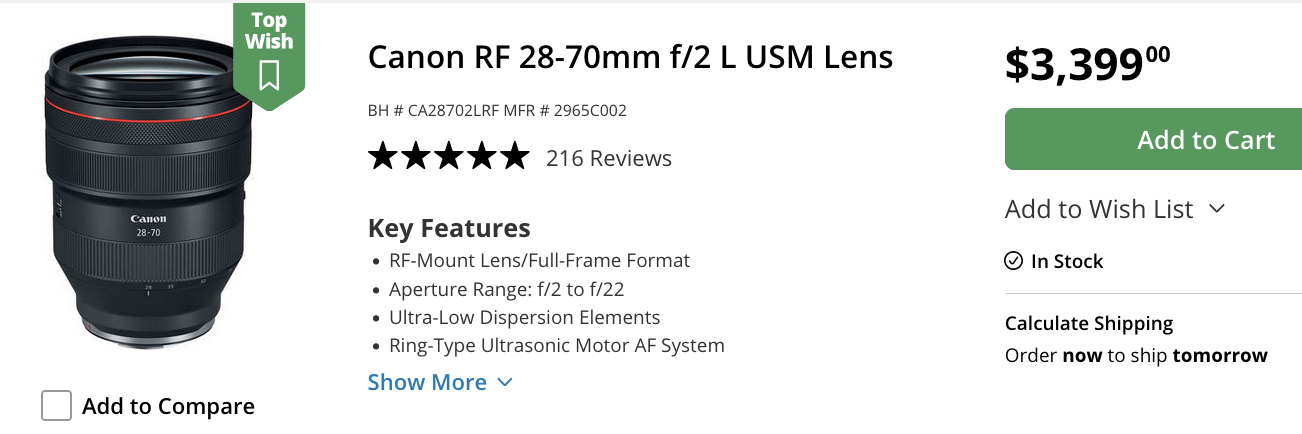
  • RF 35–135mm f/2 — frequently mentioned as a dream lens that could challenge the RF 28–70mm f/2 as a top all-around professional zoom.
  • RF 50–150mm f/2 — desired as a slightly more realistic alternative to a 35–135mm f/2, still offering constant f/2 with reduced size and cost.
  • RF 70–150mm f/2 — proposed as a compact, high-performance telephoto zoom to complement fast standard zooms.
  • RF 70–180mm f/2.8 — expected to be lighter and more compact than the current RF 70–200mm f/2.8, appealing to video shooters and travelers.
  • RF 70–200mm f/2.8 (lighter / updated version) — users want a redesigned version with reduced weight and size while retaining optical quality and teleconverter support.
  • RF 24–50mm f/2.8 — requested as a compact, fast standard zoom similar to Sony’s offering, prioritizing portability over extreme range.
  • RF 24–70mm f/4 (compact) — preferred by many over faster lenses due to smaller size, lower weight, and modern high-ISO camera performance.
  • RF 24–105mm f/2.8 — desired for its versatility, constant f/2.8 aperture, and ability to replace multiple lenses in professional kits.
  • RF 15–35mm f/2.8 L — mentioned as a highly desirable ultra-wide zoom for APS-C bodies like the Canon C70.
  • RF 35mm f/1.2 L — considered a major gap in Canon’s RF lineup, especially as a companion to the RF 85mm f/1.2 L.
  • RF 50mm f/1.2 — repeatedly referenced as a cornerstone fast prime that many users plan to own or already rely on.
  • RF 85mm f/1.2 — often paired with the desire for a matching RF 35mm f/1.2 to form a premium prime duo.
  • RF 35mm f/1.4 (Canon or Sigma) — requested as a more affordable, smaller alternative to an f/1.2 lens, especially if Sigma gains RF access.
  • RF Sigma 14mm f/1.8 — strongly requested if Canon opens the RF mount to third-party manufacturers, filling a unique ultra-wide fast-prime niche.
  • RF 300–600mm f/4–5.6 L — anticipated as a long-range wildlife lens positioned between affordable zooms and expensive super-telephoto primes.
  • RF 100–300mm f/2.8 — mentioned as a high-end professional zoom that could replace multiple telephoto primes.
  • RF 100–400mm (updated / improved version) — users want a modernized version with better optics and features while remaining affordable.
  • RF 400mm f/5.6 (affordable prime) — desired as a lightweight, reasonably priced telephoto prime similar in spirit to older EF designs.
  • RF Fisheye lens(prime or zoom) — requested as a native RF option, either as a dedicated prime or an RF version of the 8–15mm zoom.
  • RF-S 22mm f/2 (ported from EF-M) — users hope Canon will revive popular EF-M compact primes for the RF-S system.
  • RF-S 32mm f/1.4 (ported from EF-M) — highly regarded EF-M lens that many want reborn for APS-C RF cameras.
  • RF 35–150mm f/2.8–4 or f/2–2.8 — desired as a versatile medium-telephoto zoom similar to Tamron’s popular designs.
  • RF 100–500mm (lighter / cheaper variant) — interest in a more affordable or lighter version to bridge the gap between consumer zooms and super-telephoto lenses.

The suggested RF 35-135mm F2 is viewed as a potential favorite that could challenge the RF 28-70mm F2 for the user’s top spot.

Back To Top